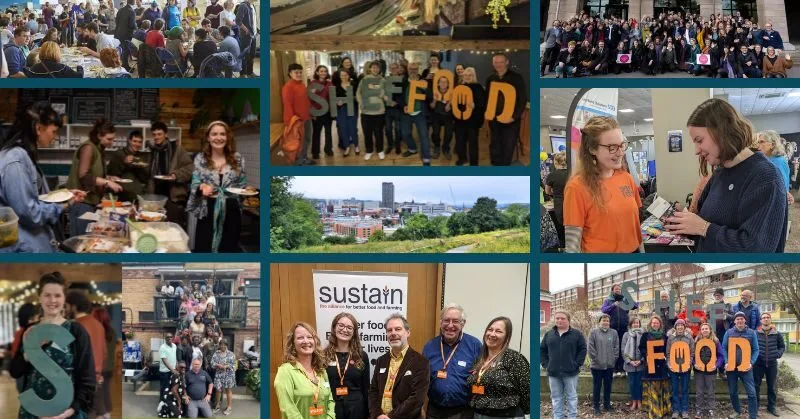
This past year at ShefFood has been full, busy, and incredibly rewarding. Across Sheffield, our local food system has continued to grow stronger, thanks to the dedication of countless organisations, volunteers, and community members. From research and mapping to workshops, community visits, and collaborative projects, 2025 has been a year of real achievement, connection, and impact so far.
One of the highlights has been seeing Sheffield’s community food networks expand and flourish. The launch of the Community Food Provision Map was a major milestone, bringing together over 130 organisations, from food banks and community fridges to lunch clubs, social eating spaces, and reduced-cost food shops. Whether you’re looking for support or hoping to get involved, it’s now easier than ever to find the right local project.
We’ve also welcomed new partners this year, including Likewise Sheffield, Sheffield Community Land Trust, Darnall Allotment, and ADIRA. Their energy and commitment, alongside that of long-standing partners, have helped create a genuinely collaborative ecosystem. From community kitchens to local food co-operatives, it’s been wonderful to see people coming together to share knowledge, resources, and opportunities, all with the goal of building a resilient, inclusive, and vibrant food community.
Research has continued to play a central role in our work. The Feeding the Future project, in partnership with the University of Sheffield, CLES, and Fork – Food in Place Ltd, highlighted how Sheffield’s public sector spends £14 million annually on food, and that two-thirds of it goes to national suppliers. By thinking about how more of this could be sourced locally, we’ve been able to share practical ideas for strengthening regional food businesses, improving access to fresh produce, and building a more resilient city food economy.
We’ve also kept track of community kitchen access, collected data on food provision usage, and worked to ensure Sheffield’s Local Food Action Plan reflects the diversity of the city. Ensuring that this roadmap toward 2030 is both realistic and inclusive has been a key focus, as real change relies on understanding the realities on the ground.
Of course, none of this happens without people connecting, learning, and sharing. This year we ran workshops, webinars, and events to do just that. The first Community Food Provision Working Group of 2025 brought together 25 organisations to share successes, challenges, and priorities. Webinars with groups like the Dignified Food Alliance reached even more people. At the same time, our Good Food Movement event, featuring Poetry & Potluck, sold out in under seven hours, a reminder that Sheffield loves to come together around food.
Beyond Sheffield, we’ve continued learning and sharing with other cities, working with Feeding Liverpool, Feeding Bristol, and the Feeding Britain network. Swapping ideas and hearing what works elsewhere helps Sheffield stay at the forefront of community-led food provision, while making sure our local actions are informed by wider experience.
Behind all of this are the people who make it happen. Coordinator Nell Attwood has brought energy and commitment to community food provision across the city. We’ve been lucky to work with her this year. Alongside her, our brilliant volunteers, community members, and partner organisations have all contributed to keeping Sheffield’s food networks thriving.
ShefFood itself has also been thinking about its future, exploring new hosting and governance models to ensure the partnership remains sustainable, transparent, and equitable. Even amid staff transitions, the focus on connecting organisations, sharing knowledge, and championing local food initiatives hasn’t wavered.
Looking ahead, there’s so much to be excited about. From keeping maps up to date to supporting new partnerships, research, and advocacy, ShefFood will continue to help Sheffield’s food system become fairer, healthier, and greener. The Local Food Action Plan we developed in 2023 and updated in 2025 gives us a clear vision, but its success depends on the creativity, commitment, and collaboration of the city’s residents and organisations.
For those of you who have followed ShefFood this year, it’s been amazing to see what can happen when communities come together around food. Whether that’s finding a local food resource, joining a community kitchen, or supporting local initiatives, everyone can make a difference. And on a personal note, I’ll be taking maternity leave this autumn, so this will be my last article for a while. I’m confident, though, that ShefFood will continue to grow, connect, and support Sheffield’s food community in my absence. Thank you to everyone who has followed, shared, and supported our work this year; it’s been a privilege to write and share these stories with you.